The Art of the Catch

Robby Chin

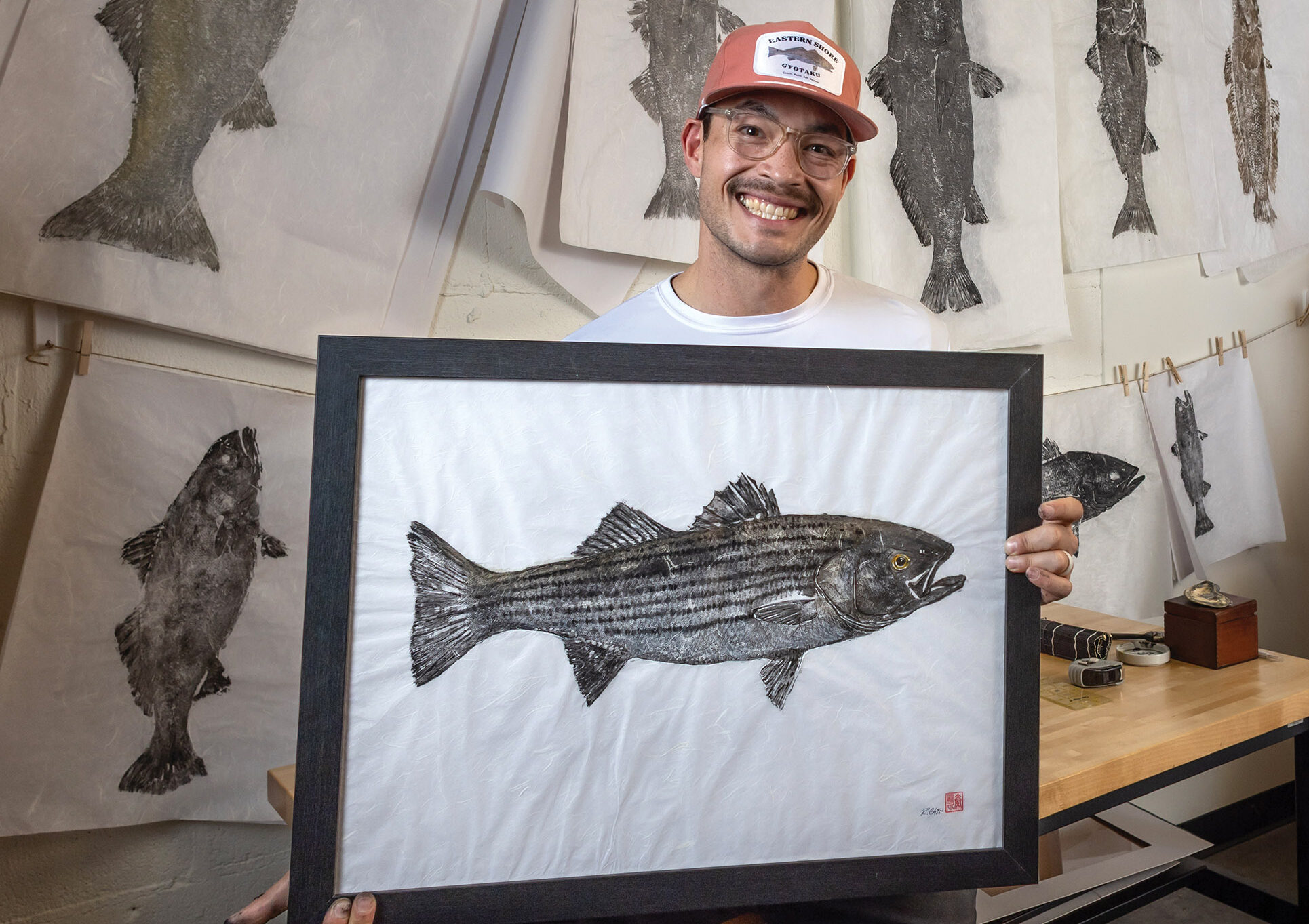
Blending a farmer’s reverence with the ancient art of Gyotaku, Robbie Chin captures the spirit of the Eastern Shore, proving the studio is less a place and more a mindset.

Studio photography by Jill Jasuta

For Robbie Chin, the art studio is not defined by four walls or a specific address. Instead, he views the studio as a “personal state of mind with elementary craft supplies.” Whether he is working at a dining room table, on the tailgate of a pickup truck, in a friend’s garage at 1 a.m., or on a dock enjoying the last warm days of the season, the location is secondary to the intention. Wherever Robbie connects with a catch, his goal is to display an act of pure appreciation, reverence and honorable purpose.

This practice is the heart of Eastern Shore Gyotaku, Robbie’s exploration of the traditional Japanese art of fish printing. For Robbie, the process begins long before the ink touches the paper. It starts with ikigai, a Japanese concept of “knowing your reason for waking up.” His daily practice is rooted in gratitude—a thankfulness for breath and a new chance at life that serves as his opportunity to artistically and meaningfully document his subjects.

Gyotaku is instinctive for Robbie. He doesn’t view the scent of his workspace as merely fishy, but rather as the fresh smell of a new connection, reminiscent of the water the fish came from. He describes the sensation of feeling the life-giving water transfer into the ink and hydrate the subtle crinkles of the paper like “hearing your favorite song on repeat” and feeling it just as deeply as the first time.

Robbie’s approach to his art is deeply influenced by his background in agriculture. He views the world through a farmer’s lens, a perspective that has taught him to appreciate both life and its impermanence. A graduate of Salisbury University with a degree in environmental studies and business management, Robbie sees the biological world as inescapably woven into our physical and economic needs.

DEEPLY MEANINGFUL
Robbie Chin balances a range of emotions while practicing gyotaku—all with a profound personal connection to the traditional Japanese art form.

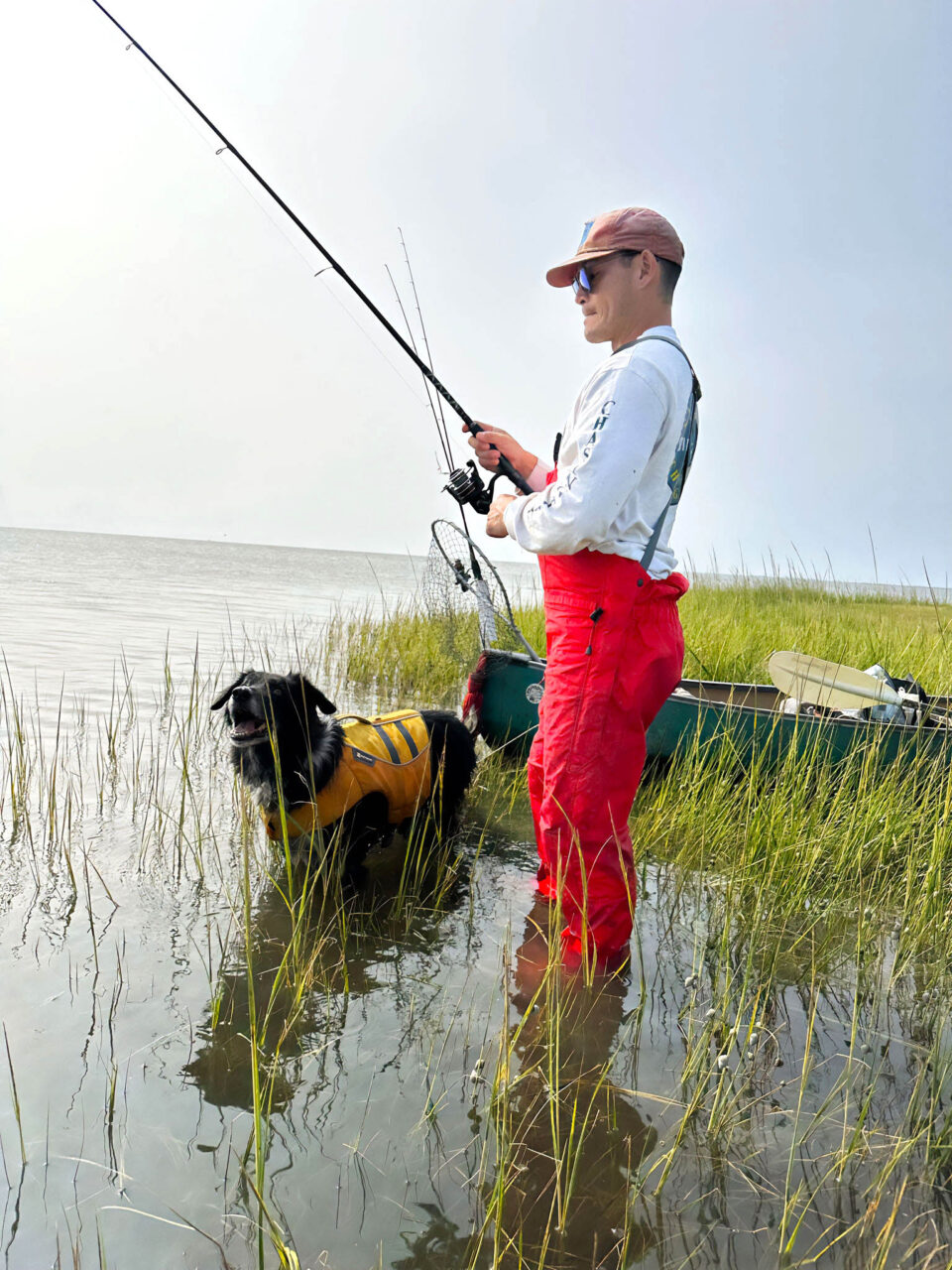
“Nurturing a seed to sale is a miracle and a tedious labor of unwavering love,” Robbie says, drawing a direct line between farming and harvesting fish. For him, a gyotaku print is not just a painting; it is a harvest report that represents food, community and culture. This reverence ensures that nothing goes to waste—he emphasizes that he wouldn’t practice gyotaku if he couldn’t eat and enjoy the sustenance offered through the sacrifice of life.

The artistic process itself is a balance of boldness and vulnerability. Robbie admits that every time he begins, he feels a mix of fear and anxiety disguised as calm confidence. He relies on the Japanese principles of kaizen, getting 1% better every day, and wabi-sabi, the acceptance of imperfection.

“I’m surprised every time I peel the paper back,” Robbie says, noting the raw beauty of that initial black pressing. Once the print is made, he transitions into the detailing phase, often painting the eye last. He describes this stage as the “OG coloring book,” where he acts as an instrument guided to bring memories back into clear view.

While Robbie has mastered many species, he admits the iconic Maryland blue crab remains a challenge due to its hard shell and three-dimensional shape. After some less-than-successful attempts with soft shells, he plans to dedicate 2026 to experimenting with this cornerstone species of the Eastern Shore economy.

Ultimately, Robbie sees his art as a vehicle for connection. In his role at Salisbury University, he runs the Powerful Connections peer mentoring program, helping students build community—a mission that parallels his art. Eastern Shore Gyotaku is his way of honoring the culture of the Shore, connecting people to a place, a memory or a lifestyle they yearn to feel deeply.

“The one thing that isn’t surprising,” Robbie says, “is how amazing that fish tastes after taking the time to relish everything about it.” CS