Even if you’ve smoked tobacco for many years, there are major benefits to stopping. Cigarettes contain more than 7,000 chemicals, and smokers are at risk for numerous health problems.
Those who quit before age 40 reduce their excess risk of cancer-related death by 90 percent, according to the American Cancer Society.
And it’s not just lung cancer — smokers are also at risk of many other types of cancer, such as cancers of the mouth, throat, voice box, pancreas, stomach, liver, cervix, colon and rectum, the American Cancer Society says. Among the additional health concerns are heart attack and stroke.
If you’re ready to stop smoking, follow these steps.
Set a quit date.
Important dates are planned in advance — for example, a wedding or a house closing date. Pick a date to quit and make sure you stick to it.
Quit with a friend.
If your friend or loved one smokes — especially if you live in the same house — it can help to quit together and motivate each other.
Taper down on nicotine.
Once you choose your quit date, make a schedule of how to taper the amount of nicotine you’re using. For example, if you currently smoke a pack of 20 cigarettes a day, move down to 15, before decreasing that number further.
Use medication
Medication can be extremely helpful to stop smoking. It won’t do the work for you — you must commit to quit — but medication makes quitting easier and more successful. Talk to a healthcare practitioner to see what the best fit for you is, which may be a combination of medications. There are nicotine replacement therapies like nicotine gums, patches, lozenges, inhalers and nasal sprays; antidepressants like Wellbutrin and Zyban (bupropion); and Chantix (varenicline). Wellbutrin, Zyban and Chantix are all prescription medications.
Because it’s common for smokers to use smoking as a coping strategy, it’s important to have another coping strategy in place — something that is not an intoxicating substance. It’s also helpful to talk to a therapist as part of this process.
Once you stop smoking, your body starts reaping the benefits almost right away and only continues to improve over a lifetime as an ex-smoker.
These tips can also be used to stop vaping, and for those who vape, there are ways to taper down the amount of nicotine in the liquid.
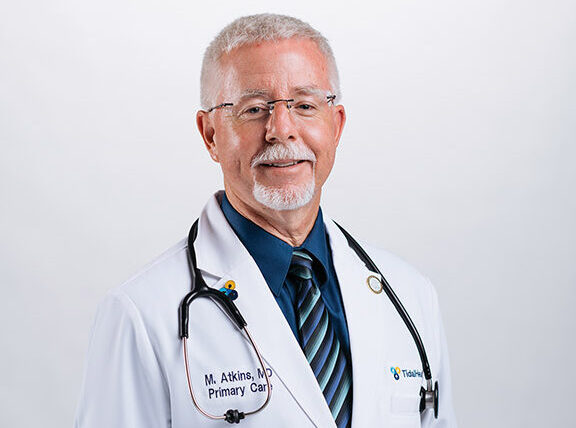
If you’re looking to stop smoking, vaping or using tobacco, Dr. Atkins can help. Board-certified in internal medicine and addiction medicine, he cares for patients at TidalHealth Primary Care in Crisfield. To schedule an appointment, visit
tidalhealth.org.