Perched above the water’s edge, a Broadneck Peninsula home is rebuilt from the ground up to embrace light, fresh air and peace
Written by Kristen Hampshire
Photography by Peak Visuals
When you’re always on the go, the idea of quieter surroundings—out of earshot of the Baltimore-Annapolis bustle—can inspire an entirely different way of living.
This is what led Jenna Whitney and her husband, Mark, to leave behind the steady hum of a nearby busy road for something far less complicated, where water, fresh air and a winding approach past a horse farm set the tone. “We were trying to get closer to nature, peace and quiet,” says Jenna, who notes that the couple travels frequently. When they are home, it’s all the more valuable to sink into a space and leave the windows open, with sounds of nature and natural light flooding through.
So, they shifted gears from the home where they raised their family in Arnold’s Glen Oban community to nearby Ashby. Set along a quiet stretch on the Broadneck Peninsula, their new property delivers exactly the sense of getaway they were seeking.
It is quiet by design.
The house itself, however, told a different story at first. What appeared to be a straightforward renovation quickly revealed a structure that had been built and rebuilt over time—it was piecemeal, inconsistent and, ultimately, unsound.
“They started taking it down piece by piece and it was down to the cement,” Jenna relates. “It was much more than we expected.”
What followed was less renovation and more reset.
Rebuilt From the Ground Up
The homeowners enlisted the help of TailorCraft Builders of Severna Park and Annapolis Interiors. Architects Melanie Stern and Paul Schilder of MKS Architecture were initially brought in to rework the existing home within its footprint. The plan was to refine, not replace it, to bring clarity and cohesion to a house that had evolved without a unifying vision.
But once demolition began, that approach gave way to something more fundamental.
“Structurally, the house was kind of cobbled together,” Paul says. “As more demo happened, we discovered a great deal of failing or faulty work.”
Rather than expand, the team chose to rebuild, using the original foundation and footprint as a guide while rethinking everything above it. Ceiling heights were raised, systems were reinforced and the layout was recalibrated to support how the homeowners wanted to live.
“We kept the ground plane and the outer bounds of the existing house,” Paul explains. “But we didn’t make an addition or expansion.”
Site Rules
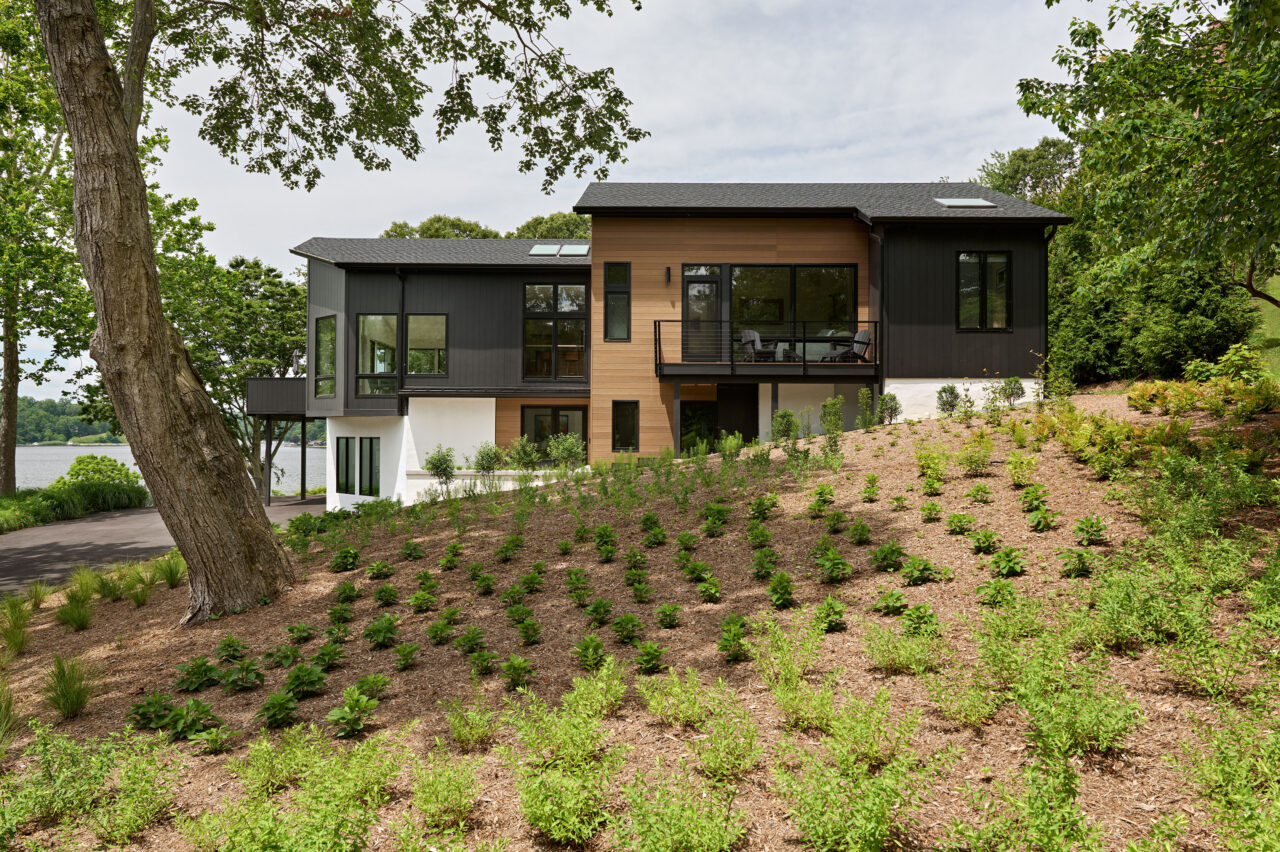
The property dictated many of the design decisions. Located within a critical area, the lot is defined by steep slopes that fall sharply toward the water—up to 30 or 40 feet in some areas—along with environmental considerations including well, septic and erosion control.
It’s a dramatic setting, and one that requires careful attention.
“It’s perched on a cliff,” Paul says simply.
This is also what makes it special.
The home is designed to open toward the natural world outside. This was accomplished by orienting views, outdoor spaces and interior sightlines toward the water while stabilizing and restoring the landscape with native plantings.
The result is a property that feels both anchored and expansive, where architecture and environment work in tandem. “You don’t hear traffic noise at all,” Paul says. “You hear boats, and that’s about it.”
A Bright, Airy Feeling
From the outset, Jenna and Mark were clear about what mattered most: natural light, good ventilation and a layout that felt easy rather than overdesigned.
“If you’re going to live by the water, you need to be able to open the windows year-round,” Jenna says. “And I wanted to not have to use lights during the day.”
This philosophy shaped everything from window selection to spatial organization.
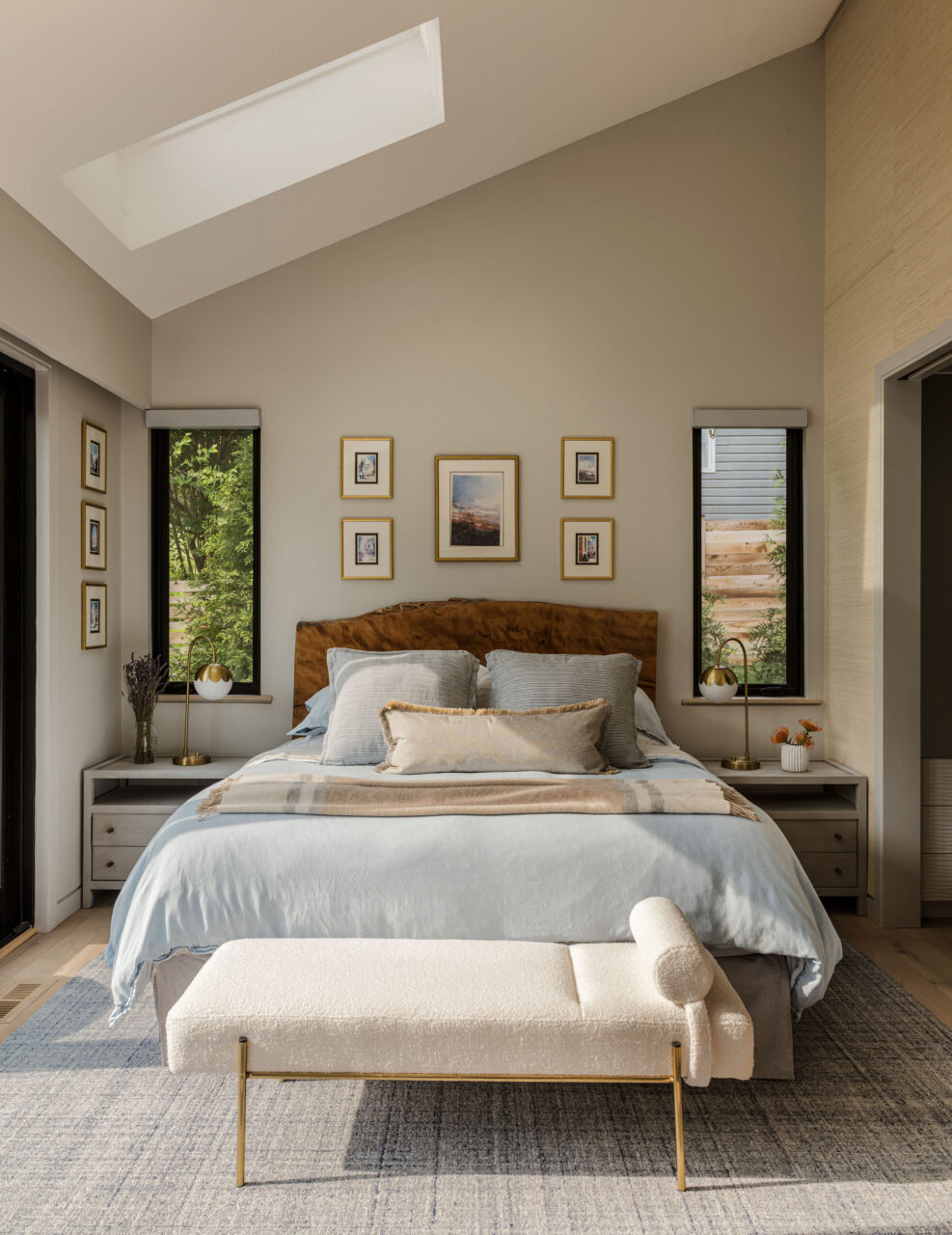
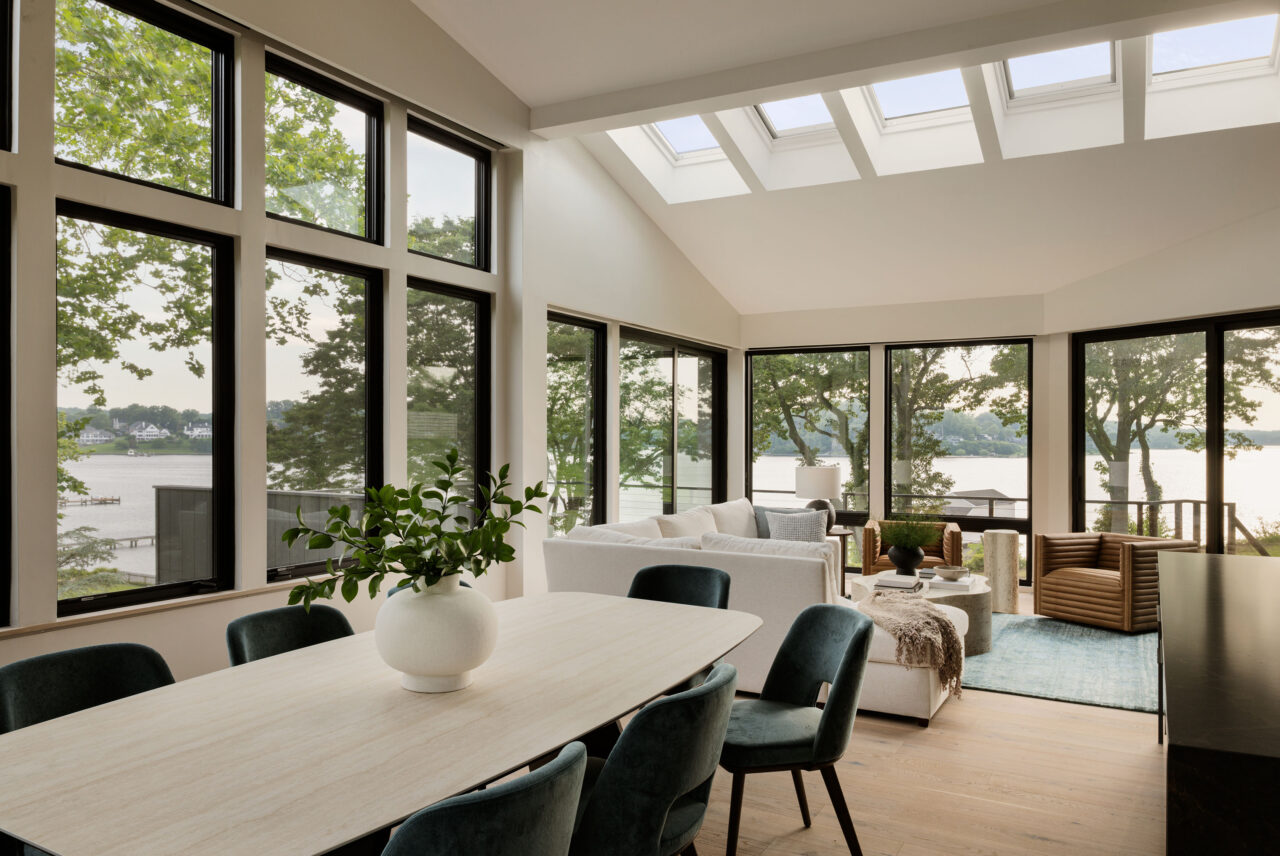
Every window in the home can be opened, including large venting picture windows that preserve uninterrupted views while promoting airflow. Skylights (many of which can be opened) draw light into the center of the home and create natural circulation.
The effect is subtle but constant. Even on overcast days, the house feels bright. Even on still days, it breathes.
“If I open the basement windows and the skylights, it creates a really nice flow of air,” Jenna says.
“If you’re going to live by the water, you need to be able to open the windows year-round. And I wanted to not have to use lights during the day.”
— Jenna Whitney
User Experience
One of the most transformative changes came from rethinking how the home is entered and experienced.
Originally, the front door sat on an upper level, reached by a series of exterior stairs and decks that made arrival feel disjointed. “It was unclear where to go,” Melanie says.
The redesign brings the entry down to the main level, creating a clear point of arrival and opening the interior in a way that immediately connects spaces.
From there, the home unfolds in layers.
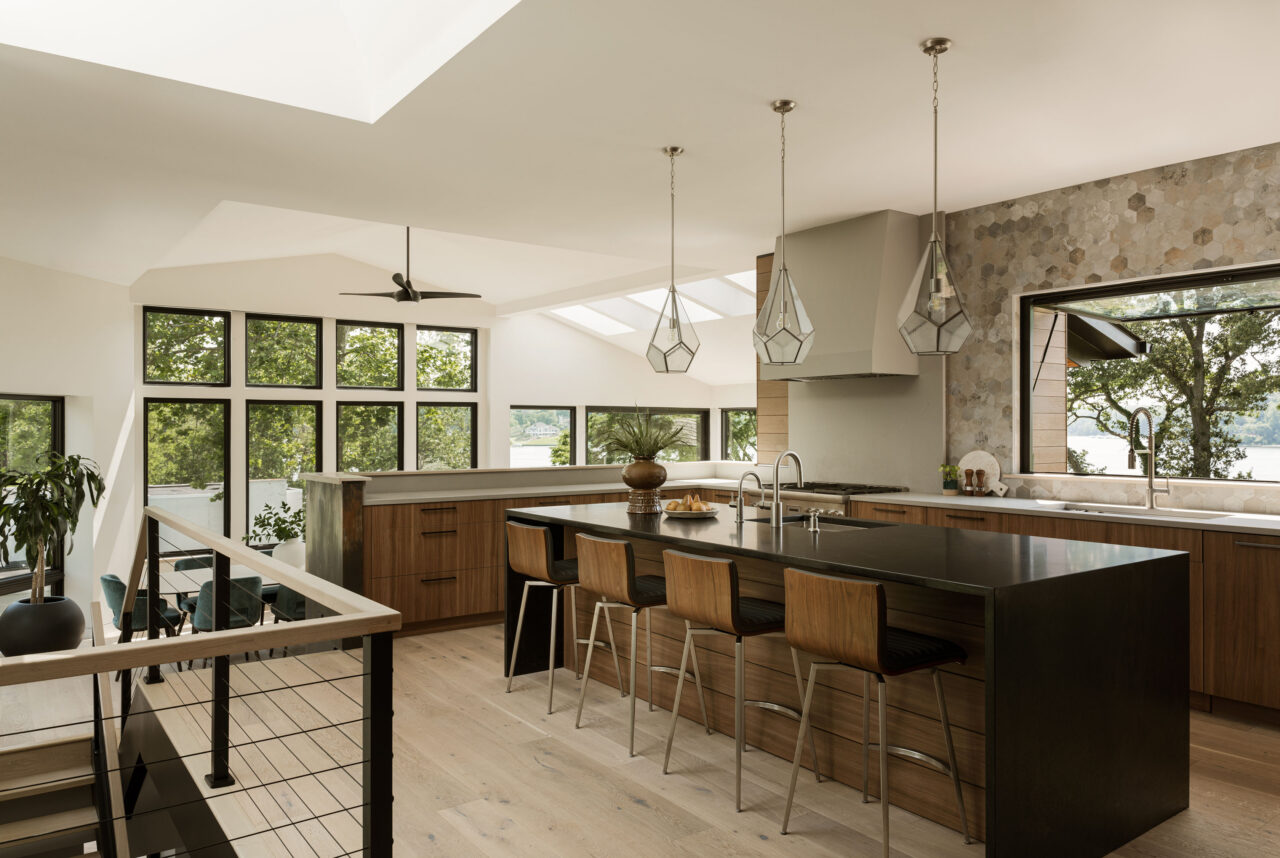
A split-level configuration allows the kitchen to sit slightly elevated above the living and dining spaces. Sightlines extend across levels, creating connection without sacrificing definition.
“When you’re standing at the counter, you’re looking over the dining and living space,” Paul says.
The footprint, just under 3,000 square feet, reflects a conscious decision to avoid excess.
“We didn’t want a lot of extra space,” Jenna says. “It was more about having a good flow and not wasting any square footage.”
Less Is More
Material selections reinforce the home’s mid-century modern aesthetic, supporting the architecture without competing with the setting.
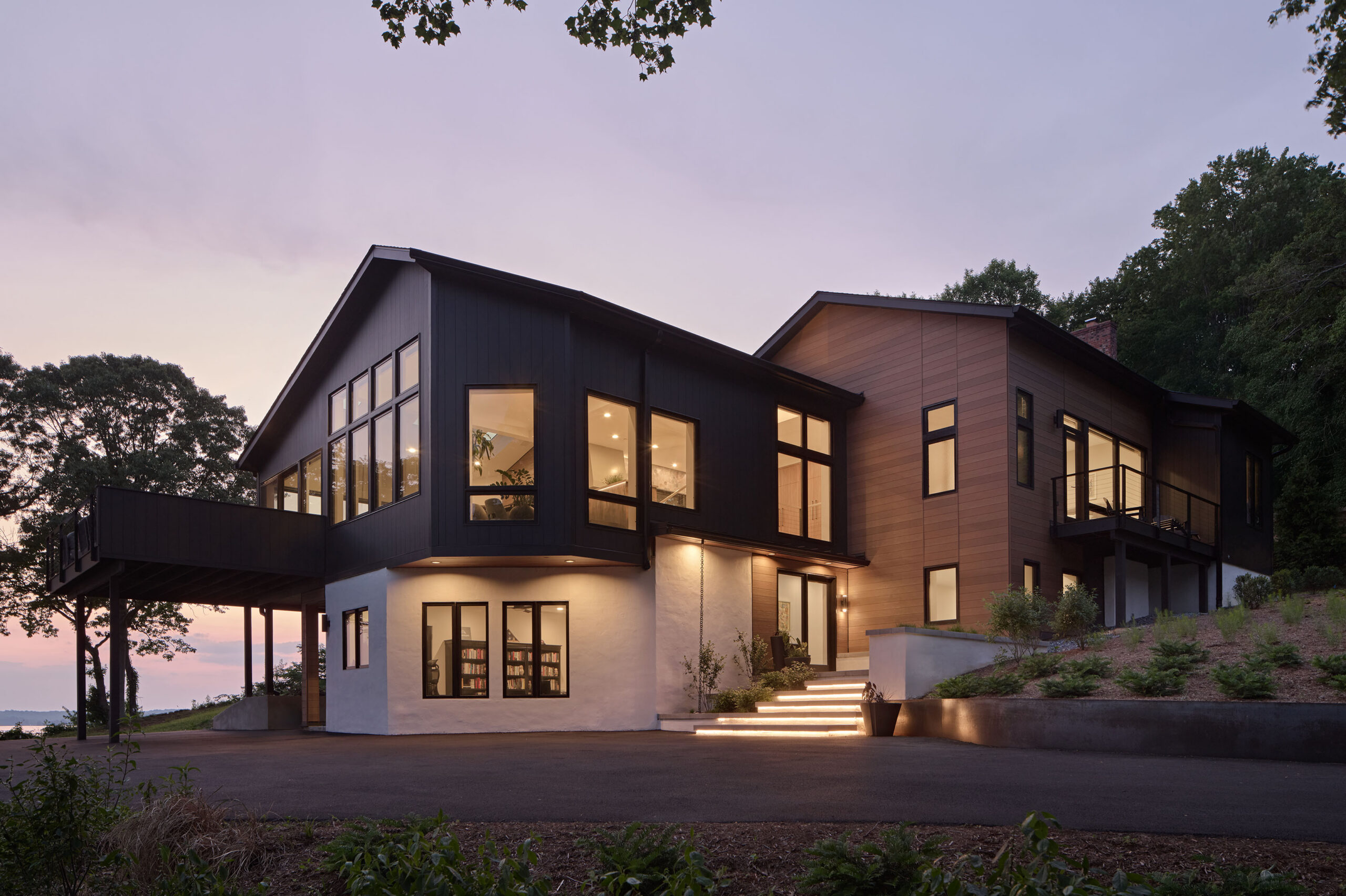
On the exterior, vertical black siding introduces a crisp, modern profile, balanced by wood-look cladding that adds warmth and durability. Inside, a palette of natural tones and textures creates a neutral backdrop for artwork and collected pieces.
“We were trying to recreate a very neutral setting where our artwork could pop,” Jenna says.
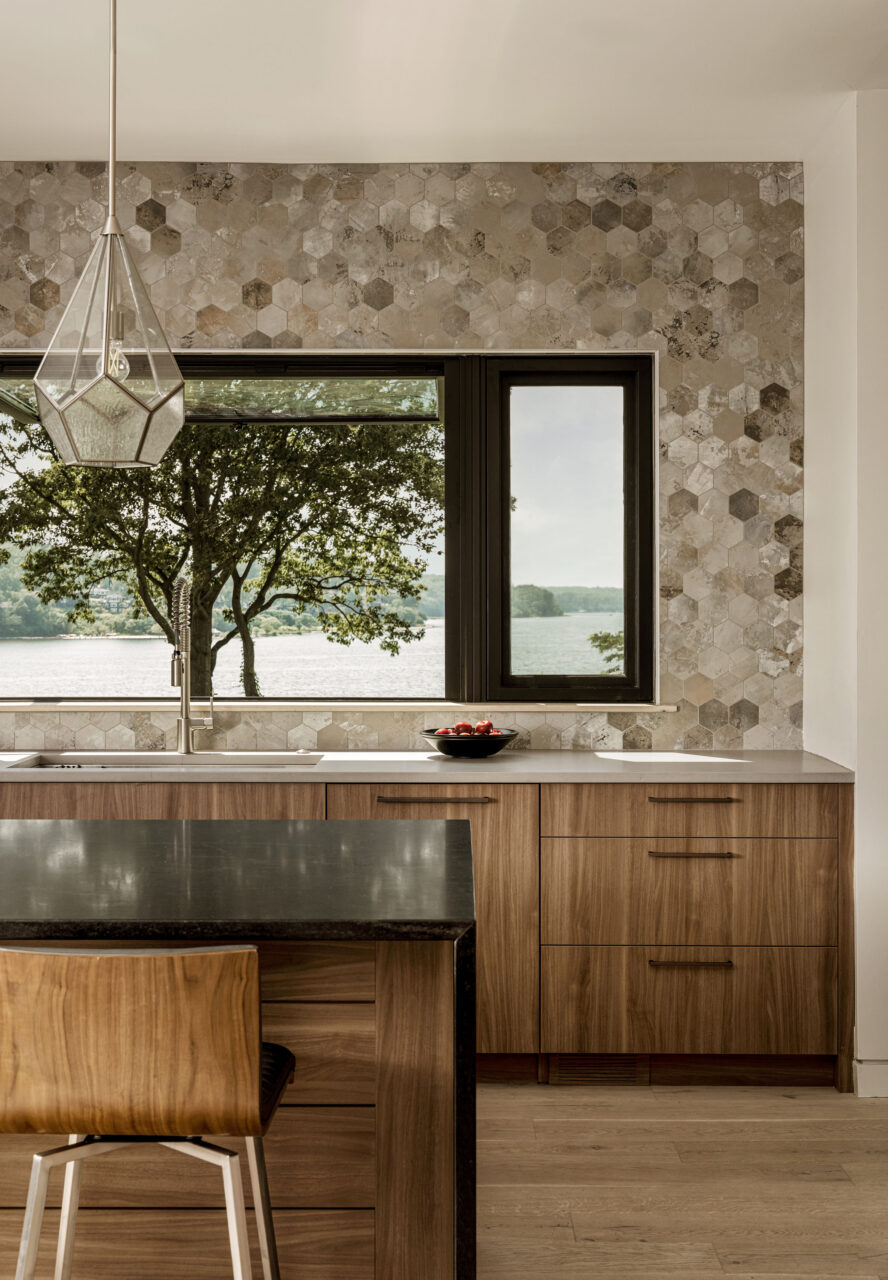
The kitchen includes some carryovers from their previous home’s renovated kitchen; Jenna stayed with the walnut cabinets and natural stone rising from the cooktop.
But instead of stainless steel appliances, she opted for concealed fronts that blend with the cabinetry. The range hood is discreet.
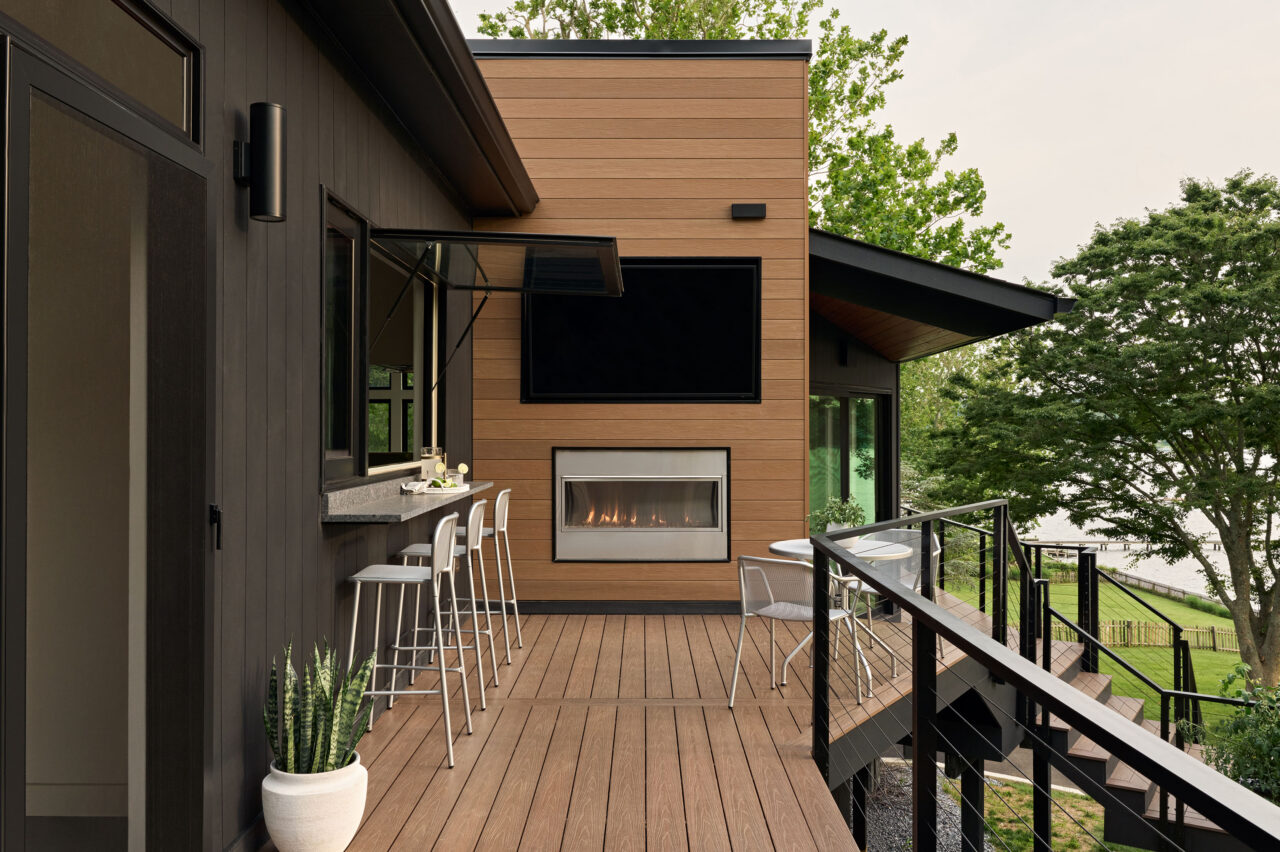
Then there was the divisive wall that had to go. Now, a pass-through window above the sink opens to the deck, reinforcing the connection between inside and out.
“I leave that open all the time,” Jenna says. “It’s a continuation of the space.”
Details include the tile, lighting and custom finishes that add depth without overwhelming the overall composition. At night, layered lighting softens the interior. “It glows,” Melanie says.
Outdoor Escape
Outdoor spaces extend the home’s footprint in a way that feels natural rather than added on.
A continuous deck runs along the back of the house, connecting the kitchen, living areas and primary suite. The deck serves both as a circulation path and a destination—a place to gather, to move across or simply to pause.
“We can open everything up in the spring and fall and just move in and out,” Jenna says.
The landscape is a long-term project, with native plants stabilizing the slope and inviting wildlife, while phased improvements respond to permitting constraints and the realities of building on the water.
The evolution is part of the place, and one that the couple can help shape while they enjoy their home and live in the moment. “I love to read and we have a sectional on our deck,” Jenna relates. “With the speakers going and some light music, a book and glass of wine, watching the sunset—it’s the perfect spot to sit.” CS