Publishing a Family Promise

Written by Kristen Hampshire | Photography by Jill Jasuta

Jim Loveless book and photo

Author Jim Loveless fulfills a lifelong pledge, turning his father’s WWII bombardier experiences into a story of legacy, survival and admiration

Some promises take a lifetime. For Jim Loveless, the vow was given quietly in 1972 on Father’s Day, shortly after he graduated from high school. The gift to his father wasn’t wrapped. It was spoken. He promised his father that his story would never be forgotten.

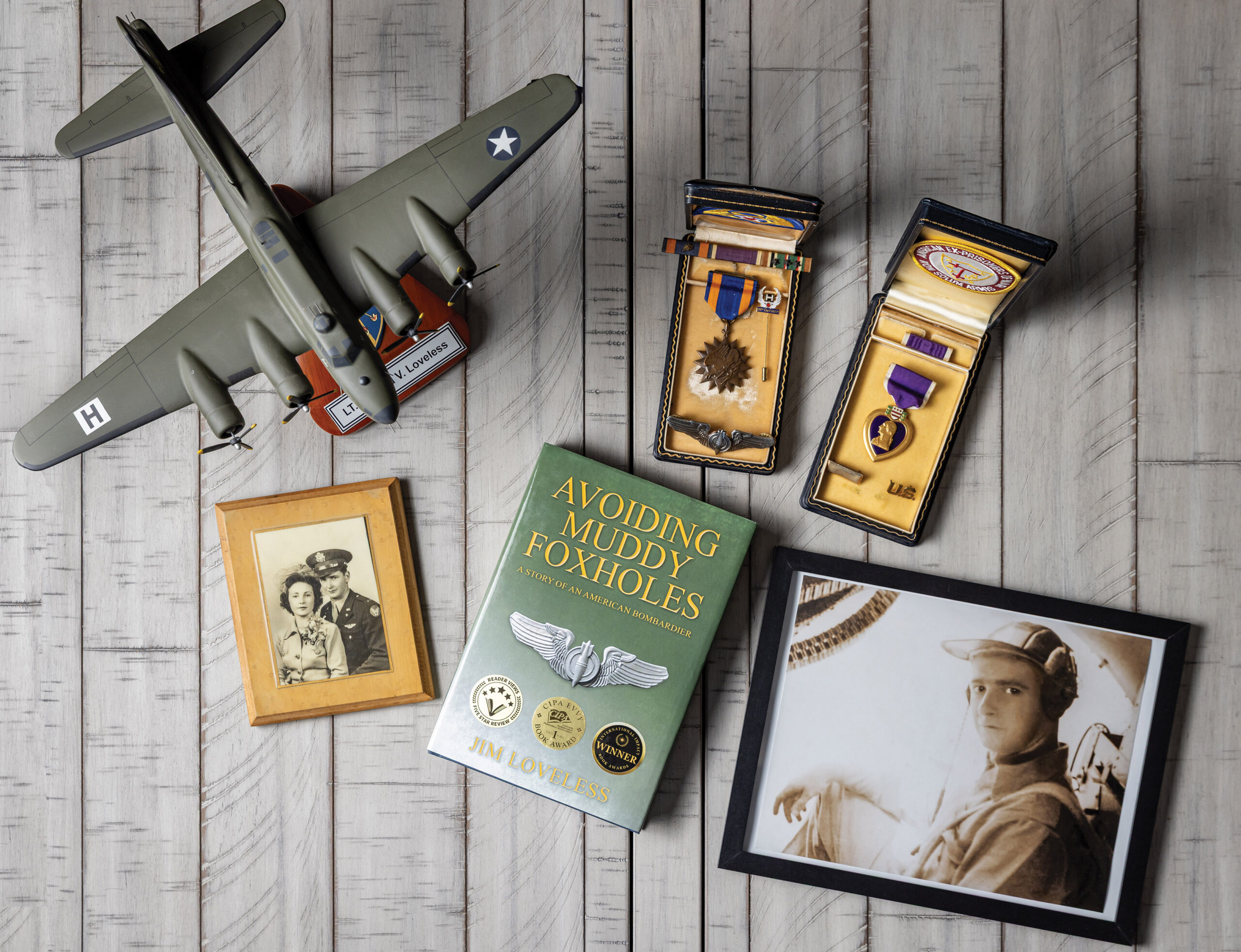
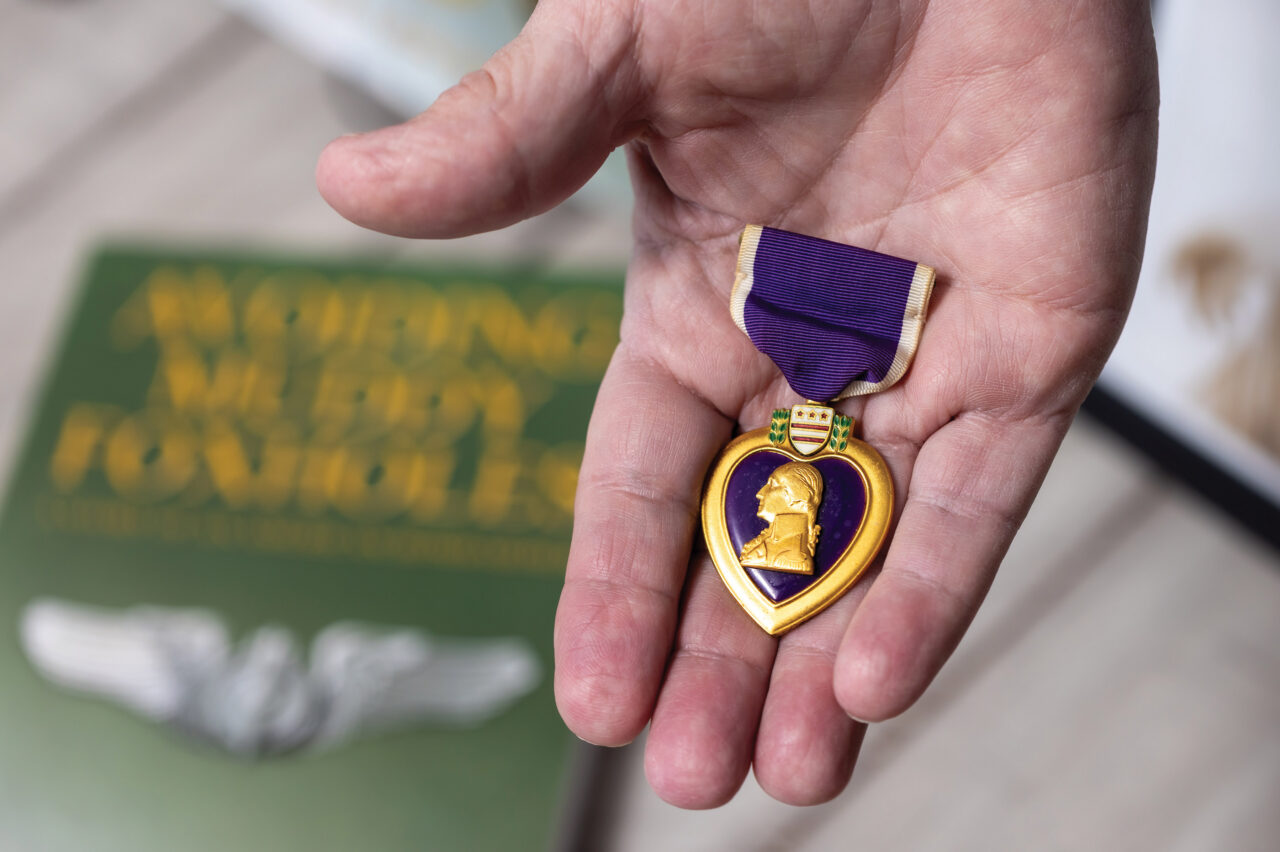
More than 50 years later, that promise became Avoiding Muddy Foxholes: A Story of an American Bombardier. It’s a deeply personal and meticulously researched account of Jim’s father, Dick Loveless, who flew B-17 bombing missions over Europe during World War II with the Eighth Air Force. He survived being shot down, captured and forced into a brutal winter march across Europe as a prisoner of war.

But this is not just a war story. It is a story of family, memory and the endurance of those who waited at home.

Jim had collected pieces of his dad’s story like nuggets that were offered at opportune times. He reflected on these nuggets during a January trip to Times Square to honor what would have been his father’s 106th birthday, where the weight of the story his father had shared “really hit home.”

All of these accounts are thoughtfully woven into a remarkable history that started with the question: So, you want to be a flyboy?

Collecting Memories
Jim grew up in suburban Maryland in the late 1950s and 1960s like many boys of his era—playing war games in the yard, sketching airplanes, and absorbing the echoes of a global conflict that still lived in living rooms and holiday conversations.

His father didn’t talk much about the war.

“He was a modest man,” Jim says. “He didn’t think it was something anyone would be interested in. But I was.”

To Dick Loveless, surviving bombing runs over Germany, bailing out of a crippled aircraft, and enduring life as a POW weren’t heroic tales. They were simply things that happened. He got through it.

But Jim listened. He gathered stories in snippets: a comment here, a memory there, something his grandmother recalled. As a boy, he would caddy for his father during Saturday golf rounds. The deal was simple: Carry the bag and earn a story.

“Do you want a story?” his father would ask during a 6 a.m. wakeup call for an early tee time.

Over the years, a larger picture took shape.

History Gets Personal
On Sept. 6, 1943, Dick Loveless’s B-17 was shot down over France during a bombing mission.

Ten men had been aboard. Five died when the aircraft crashed near the town of Champigny. Dick survived the bailout but broke his leg on landing near the village of Serbonnes, along the Yonne River.

Local residents took him in and hid him, despite enormous risk. When German forces discovered that the family was sheltering an American airman, Dick insisted on surrendering to protect the family that had saved him.

That decision forged a bond with the Bouchy family that holds strong to this day.

Every year since 1947, the Serbonnes community has commemorated the events of Sept. 6. A monument honors the crew who were lost.

For Jim, visiting the French town on the 75th anniversary of the crash was a turning point. The story he had grown up with wasn’t just family history. It was part of a living legacy overseas. He became further committed to writing his father’s story.

Delivering on a Mission
Jim had followed family tradition into the electrical contracting field, becoming a third-generation estimator. Writing was a side passion, mostly penning entertaining dog stories for an agility club newsletter.
Then Jim’s father passed away in 2003.
Years later, a sense of urgency to start and complete this passion project settled in the day after Jim retired in 2020. What he thought might be a short project became a two-and-a-half-year journey of research, cross-checking records, and weaving together memories, letters and historical context.
COVID closures complicated access to archives, but when records departments reopened, nearly all of what Jim had pieced together proved accurate.
“I didn’t want it to read like a history textbook,” he says. “I wanted it to feel like you were there.”
Avoiding Muddy Foxholes describes the combat story, the crash, the POW experience and the harrowing winter march. But it also widens the lens.
Jim incorporates his mother’s perspective, including how a telegram reported her husband missing in action. There were months of uncertainty while she was pregnant, then letters eventually came through via the French underground.
The book combines battlefield and home front.
As for the title, Jim borrowed his father’s words to a recruiter when he chose the Army Air Corps over the infantry. “Why do you want to become a flyboy?” the recruiter asked Dick. “I’m not so fond of muddy foxholes and I hate cold K-rations,” he replied.
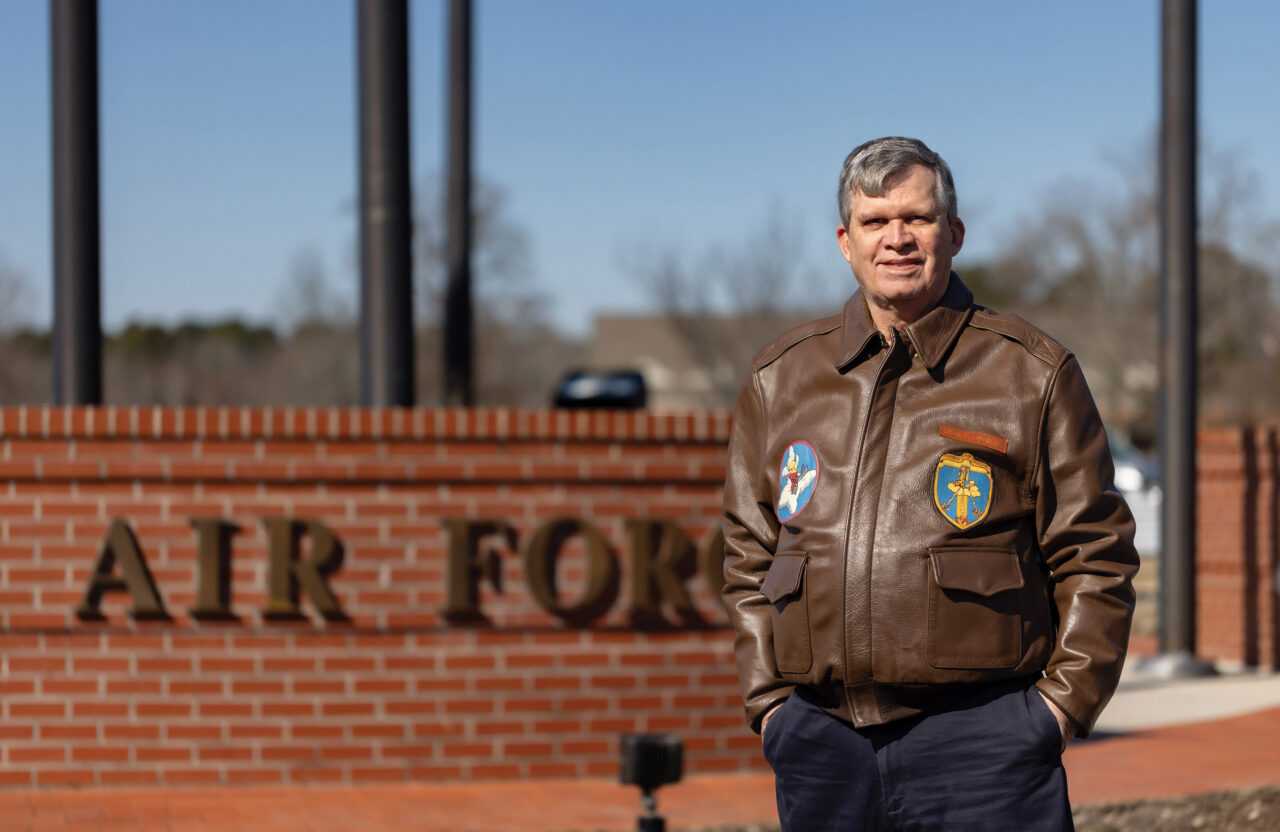
Now living in Ocean Pines, Jim shares his father’s story with visiting students at the local Veterans Memorial, bringing history out of textbooks and into lived experience.
The book, he says, was never about awards or sales. “It was a promise,” he says simply. CS