Following the Thread

From Japan to Maryland, Yuh Okano pursued her passion for textiles—and found her artistic home

Written by Harriet Edleson | Photography by Jill Jasuta

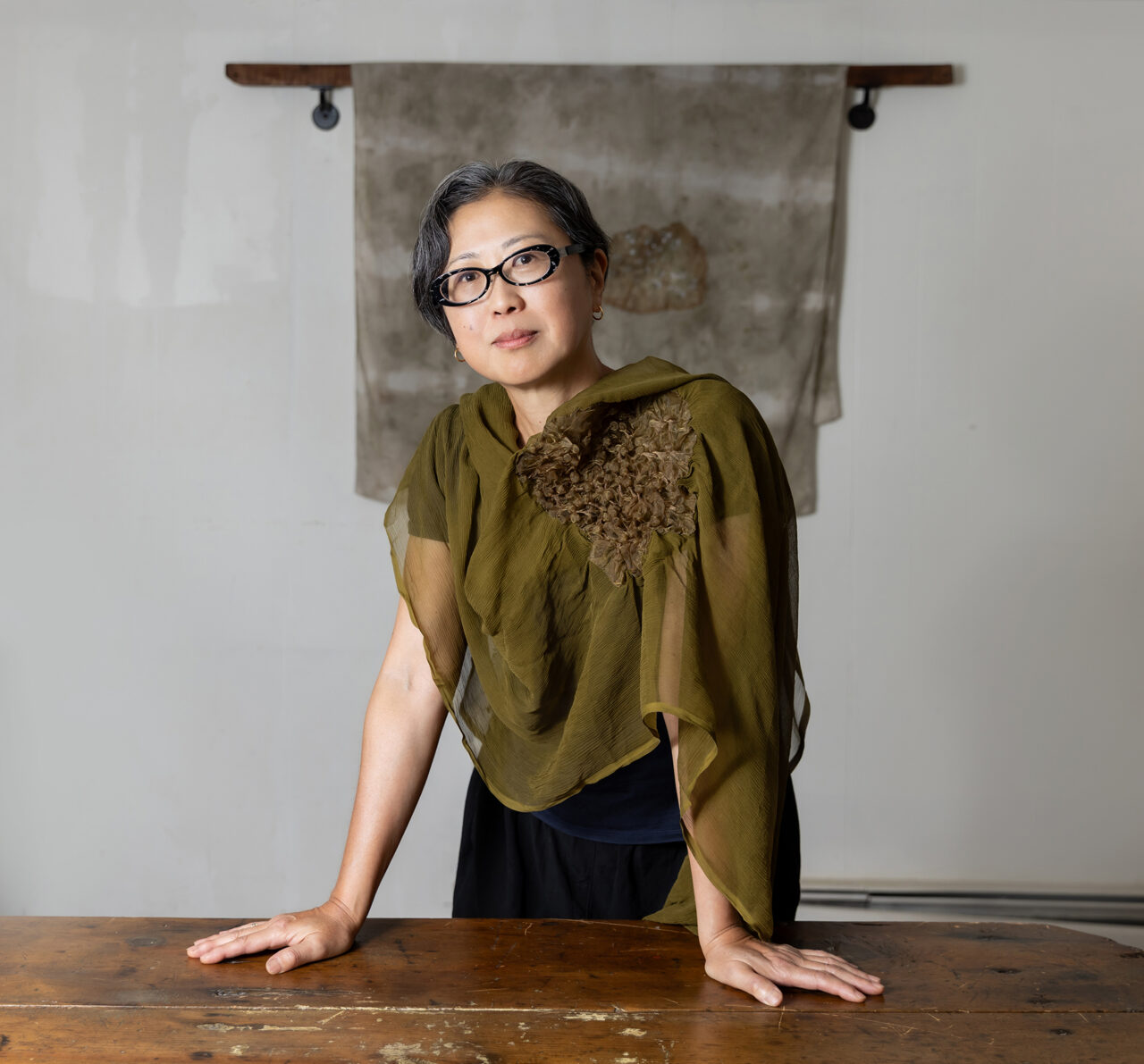
Japan has a rich history in textiles, so it’s not surprising that Yuh Okano was drawn to the art.

As a child in the city of Yokohama, just south of Tokyo, she would watch a maternal uncle—a graphic designer—at work. “Everything was done by hand,” says Yuh, who has been living in Chestertown, MD, since 2020. “Handmade is what I wanted to do.”

Beyond her love of textile arts, Yuh had another dream. She was determined to move from her native Japan to the United States.

But realizing that dream took time and, as Yuh describes it, “hard work.”

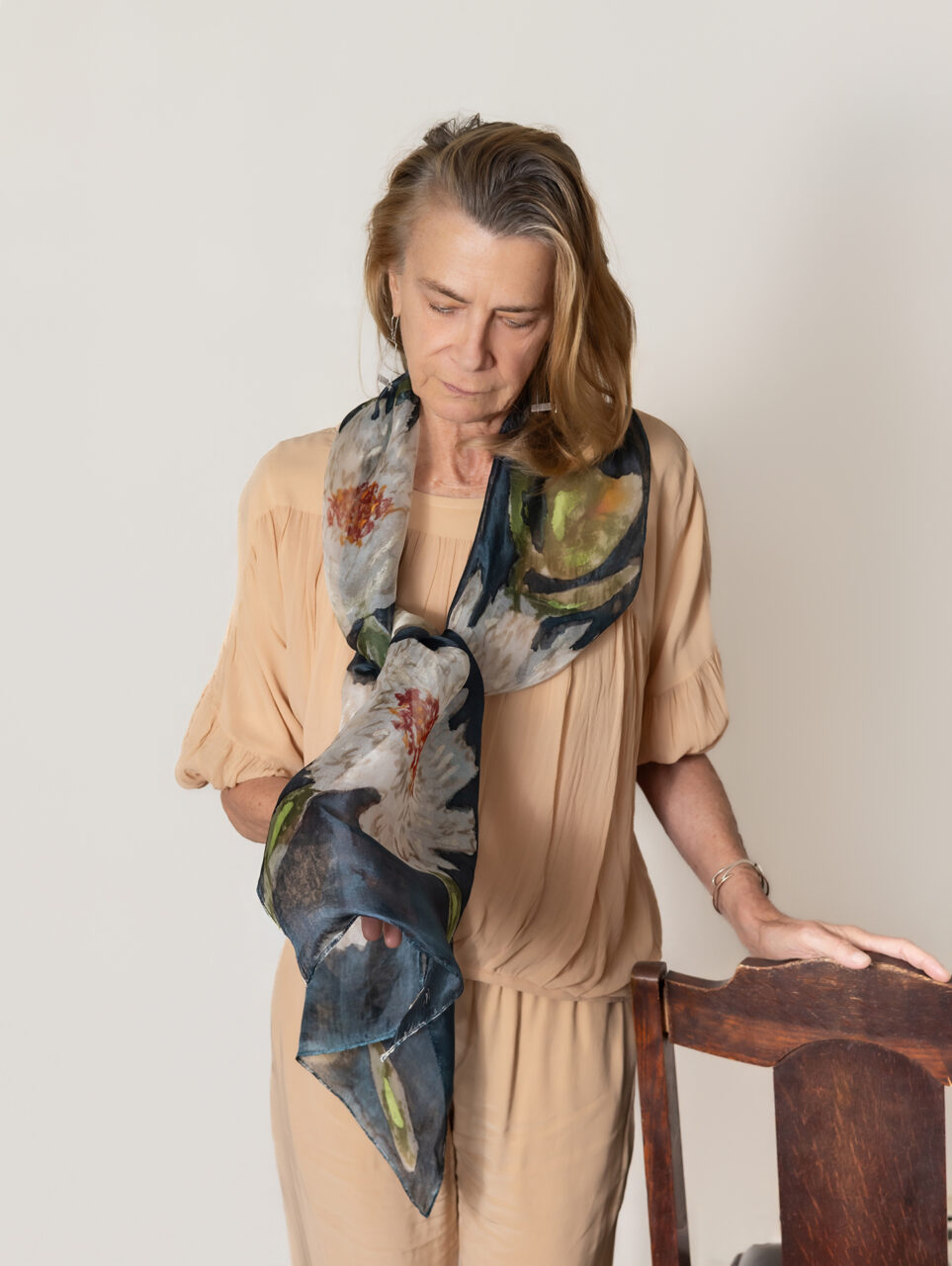
For Yuh, talent combined with determination opened remarkable doors. She has designed scarves for Martha Stewart and Donna Karan. Her work has been shown at New York’s Museum of Modern Art and is represented in the 2026 MoMA Appointment Calendar. The Museum has been producing its weekly engagement calendar since the 1950s and explores different themes from its collection each year.


“Believing in what you do is important. You have to trust your style.”
— Yuh Okano

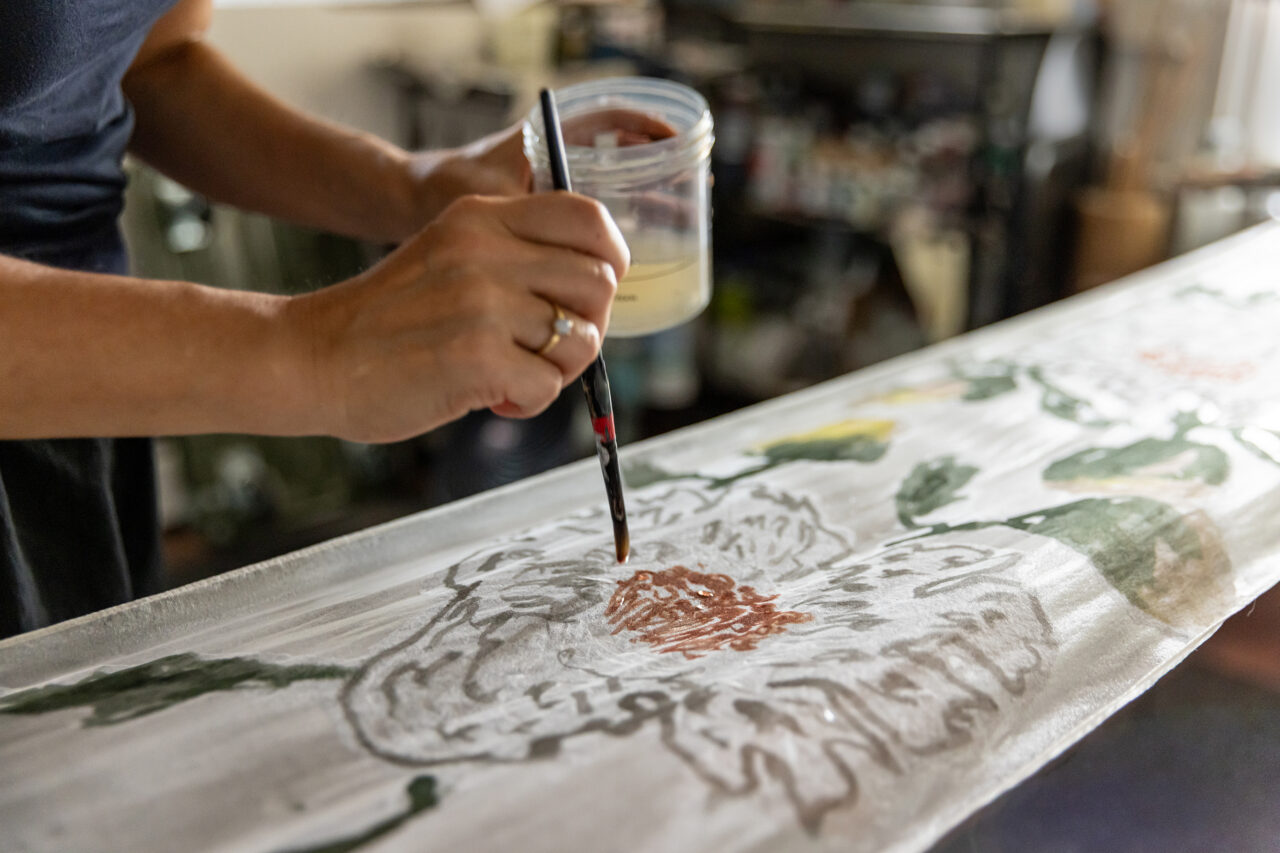
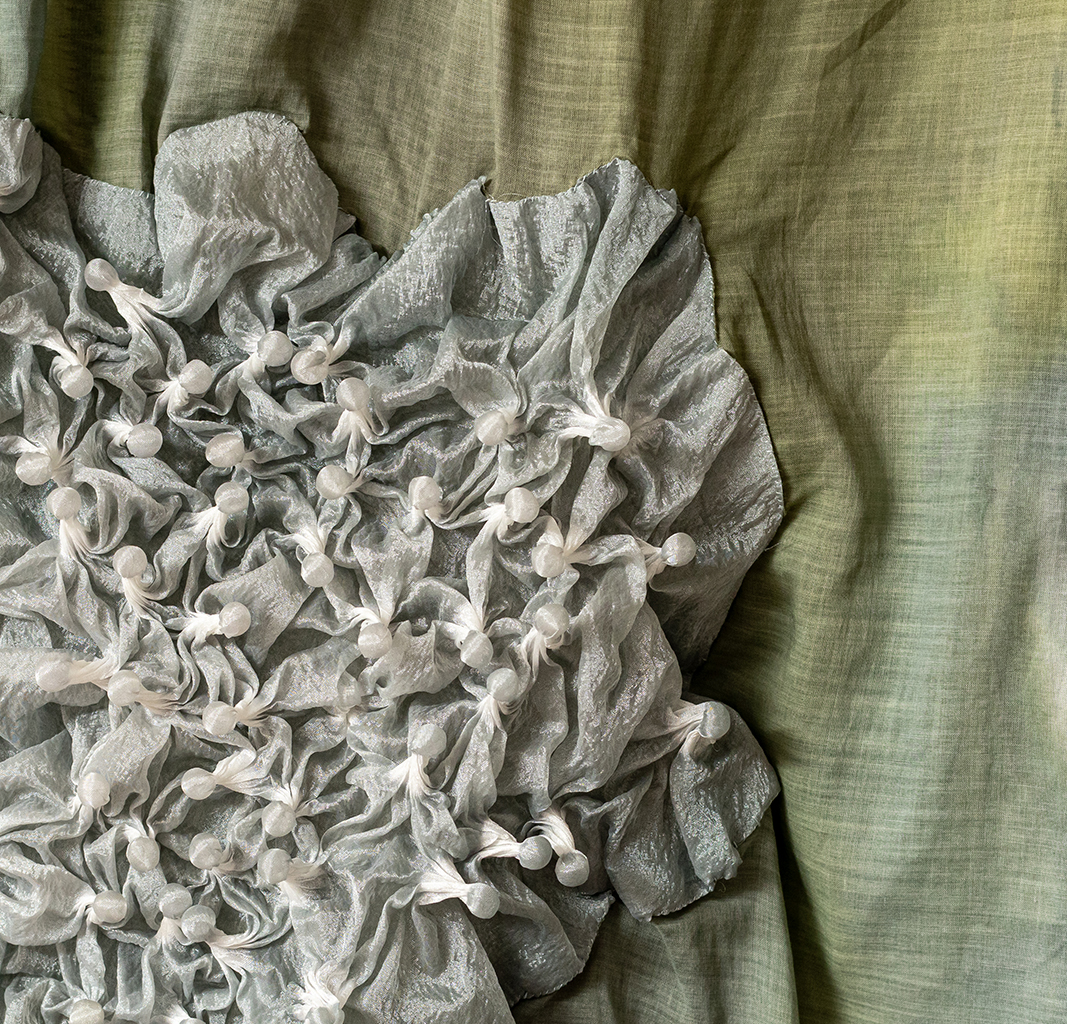
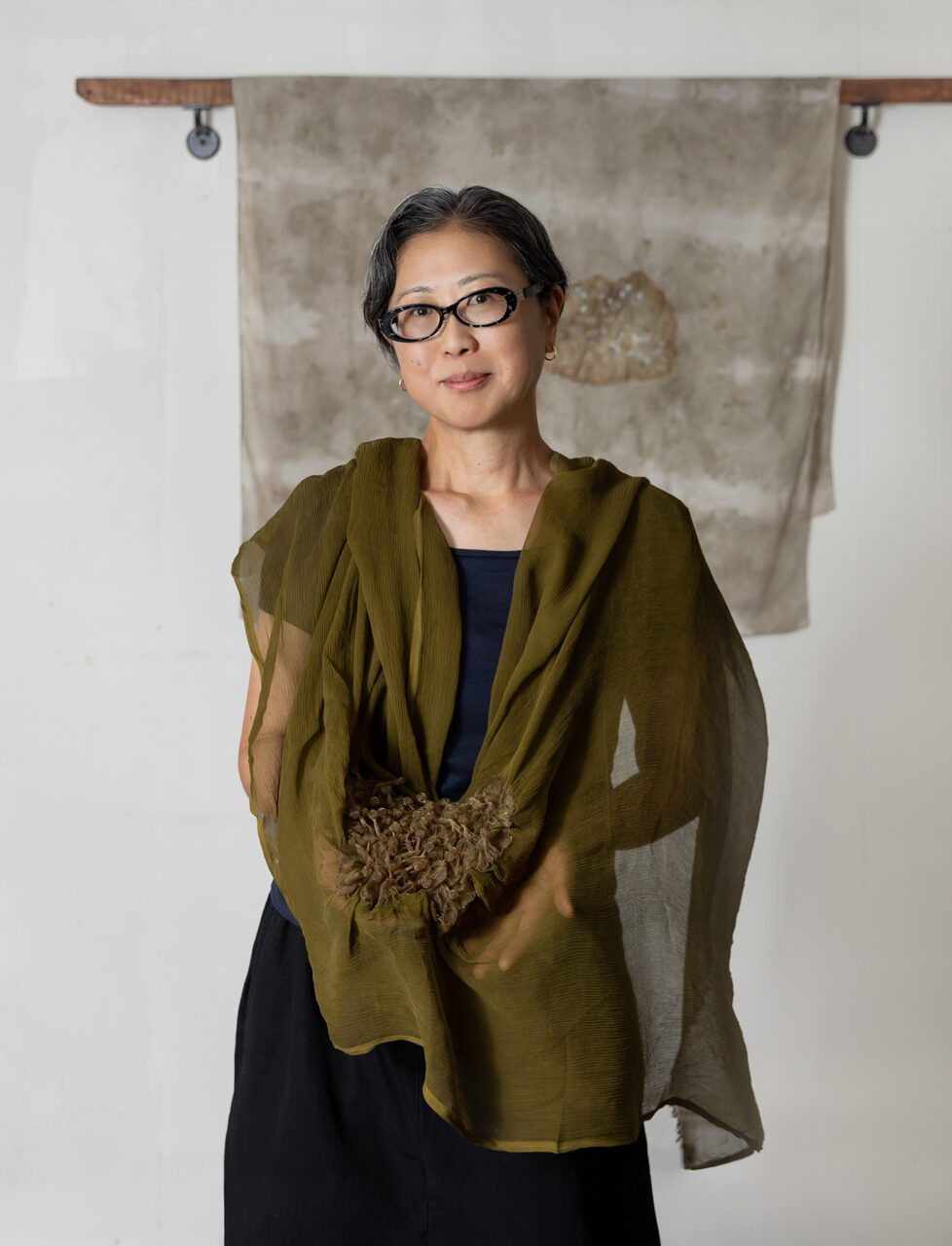
Fifty-three artworks focusing on weaving and textiles are featured in this year’s calendar. “That was lucky for me,” Yuh says of MoMA’s decision to include an image of her Epidermis (Ocean), a 71-by-20-inch polyester scarf that is shibori-dyed and heat-set. She was inspired by “the sea and its creatures” such as seaweed, coral, jellyfish, and sea urchins. Shibori, a traditional Japanese technique used to dye fabric, incorporates tying, bunching, folding, stitching, and wrapping fabric to create different patterns.

Yuh’s work is also included in the book Structure and Surface: Contemporary Japanese Textiles, published by the Museum of Modern Art in 2002.

Yuh’s father was an electrical engineer, and her mother was a craftsperson who designed, knitted, embroidered and made everything by hand. Yuh wanted something different than working in Japan after graduating from college. “I didn’t think that was the life for me, just to get a job in Japan,” she says. “I was questioning almost all the time. I wanted to understand myself.”

Yuh’s dreams began to crystallize when, at 18, she decided to become a textile fashion designer. She enrolled in art school in Japan, where she learned weaving, knitting and silk screening. “I wanted to do textiles,” she says, and her dream of relocating persisted.

Her parents said if she chose to go to the U.S., they would help her. She researched all the art and design schools in the U.S. and England, and ultimately transferred to the Rhode Island School of Design, which accepted her credits from Japan. She graduated from RISD in 1991 with a bachelor of fine arts degree.

“In the U.S. everything was very new to me,” Yuh says. “Students worked very hard, and I loved that.”

Recalling those years, Yuh, now 61, lights up. Despite classes in sculpture, glassmaking, ceramics, painting, and textiles, she laments that she “had no portfolio of textile work for the fashion industry” upon graduation.

“I couldn’t get a job in New York, so I went back to Japan, and I worked as an assistant graphic designer in Tokyo,” she says.

That lasted just a year before her luck changed. Yuh landed a position teaching textiles at a school in Japan. The focus was on dyeing textiles, including silk.

Each week she spent four days teaching and had three days off—time that allowed her to develop her own skills. “The teacher has to study as well,” she says, a smile spreading over her face. “I wanted to do something new.”

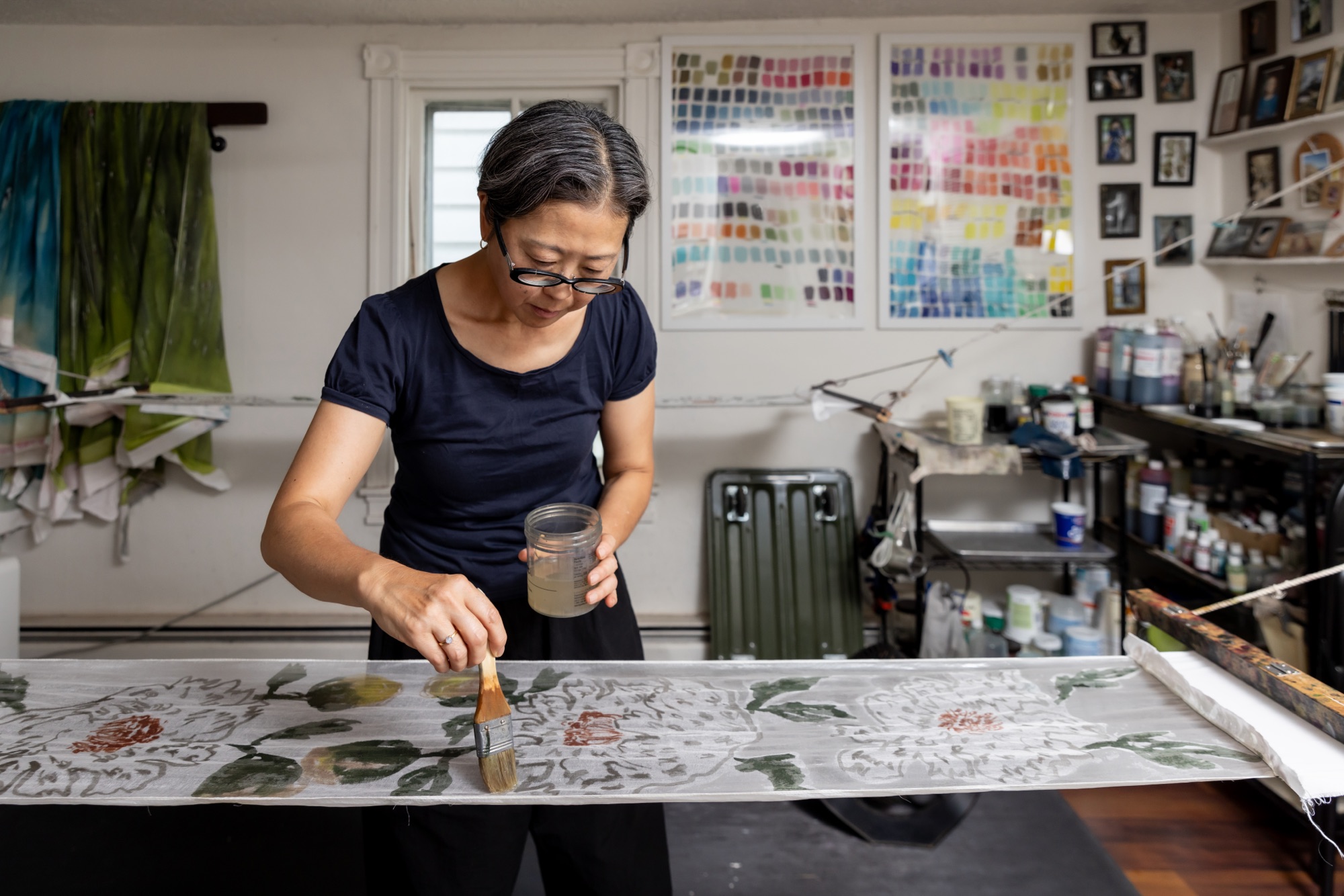
While teaching in Japan for seven years, she also had days off during the summer and winter. It was time to pursue her dream again. She traveled to New York City and showed her portfolio to design agencies, fashion designers and art gallery owners. “I knock-knocked everywhere,” she says. She began designing scarves for collections by Martha Stewart and Donna Karan four or five times a year.

In 2000, Yuh’s ultimate dream came true. She learned of the artist visa that allows artists with “extraordinary ability,” according to U.S. Citizenship and Immigration Services, to live in the U.S. while they are pursuing their work on an ongoing basis. She renewed her artist visa three times before obtaining permanent residency. “Without the artist visa, I wouldn’t be here,” Yuh says. “It changed my life.” That year she set up her own business. “Working hard is important,” Yuh says. “Believing in what you do is important. You have to trust your style.”

Yuh lived and worked in Brooklyn for 20 years.

Yet life has its twists and turns. “Business from fashion designers declined,” she says. She no longer needed to be in New York, so she began searching for another place to call home. “Since my business shifted to craft, I have to go to shows” in various cities throughout the U.S. such as Washington, D.C., Baltimore and Philadelphia.

While exhibiting at an American Craft Council show in Baltimore, she met Carla Massoni who owned a store called Create, located in Chestertown. Carla purchased Yuh’s scarves, and Yuh learned about the historic town where many artists live. Its charm, pace and supportive artistic community suited her perfectly.

What inspires Yuh today? The seasons and colors of nature—plants, flowers and ocean creatures. Besides patterns, color is a big part of her art. She likes to wear yellow and gold but her clients often like blue in her designs, or “something that makes you happy and uplifts your heart.”

If it feels right, she goes with it. “I don’t force myself,” Yuh says, who currently exhibits her work in both the U.S. and Japan. “It comes to me.”